 Global Site


EV Tire Buying Guide: What to Check Before You Buy
Because an EV’s battery can make it heavier than a comparable internal combustion engine (ICE) vehicle, it can place greater loads on its tires. EVs also deliver immediate torque, which can affect tire wear, while their quieter powertrains can make tire and road noise more noticeable.
When choosing replacement tires for your EV, start by confirming the size and performance requirements specified by your vehicle manufacturer. Then consider how wet and seasonal performance, energy efficiency, tread life, noise, and ride comfort fit your local climate, driving conditions, and priorities.
This guide applies to a wide range of electric vehicles, including models such as the Ford Mustang Mach-E and BMW i7.

Key Takeaway
Start with your vehicle's Tire and Loading Information placard and owner's manual to confirm the specified tire size, load index, speed rating, and cold inflation pressure. Among tires that meet these requirements, compare wet and seasonal performance, energy efficiency, tread life, noise, and ride comfort based on your local climate and driving conditions.
EV-specific tires may include technologies designed to address EV-related demands such as higher vehicle loads, immediate torque, energy efficiency, and cabin noise. However, meeting the size and performance requirements specified by the vehicle manufacturer should always come first.
Five Performance Factors to Consider When Choosing EV Tires
Once you have confirmed the tire size and performance requirements specified by your vehicle manufacturer, compare these five factors. Which factors matter most will depend on your vehicle, local climate, driving conditions, and personal priorities.
For a closer look at how electric vehicle characteristics such as vehicle weight, rolling resistance, noise and immediate torque can influence tire design, see our companion guide, “EV Tires vs. Regular Tires.”
-

Driving range
Whether low rolling resistance can help support vehicle energy efficiency and driving range
Range explained -

Wet-road performance
The tire's wet grip and braking performance
Section 3 -

Quiet cabin
Whether the tire incorporates technologies designed to reduce tire and road noise
Noise explained -

Tread life
Treadwear performance and the terms of any mileage warranty
Wear explained -

Winter performance
For areas with severe snow conditions, look for the 3PMSF symbol and check the tire's winter-performance capabilities
Section 2
01
Match the Size and Ratings First
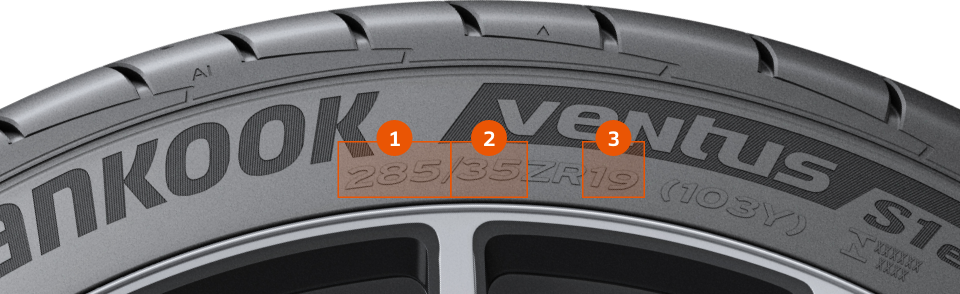
When choosing tires for an electric vehicle, start by confirming the tire size, load index, speed rating, and other requirements specified by the vehicle manufacturer. Because an EV’s battery can make it heavier than a comparable ICE vehicle, choosing a tire with the appropriate load-carrying capacity is especially important. You can generally find the recommended tire information on the Tire and Loading Information placard, typically located on the driver's-side door jamb, and in the owner's manual. Use the placard to check information such as the recommended tire size and cold inflation pressure, and consult the owner's manual for the required load index, speed rating, and other replacement specifications. Depending on the vehicle, XL (Extra Load) or HL (High Load) tires may be specified. XL and HL markings are not exclusive to EV tires, so do not select a higher-load tire simply because you drive an EV. Follow the specifications provided by the vehicle manufacturer.
How to Choose
-
1. Confirm your vehicle's specifications
Check the Tire and Loading Information placard and owner's manual for the specified tire size, load index, speed rating, and cold inflation pressure. If necessary, also check the markings on the sidewall of the tires currently installed on the vehicle.
-
2. Choose tires that meet the requirements
Match the tire size specified by the vehicle manufacturer and select a replacement tire that meets the required load index, speed rating, and any additional requirements, such as an XL or HL designation.
-
3. Compare performance for your driving conditions
Among tires that meet your vehicle's requirements, compare wet-road performance, energy efficiency, tread life, noise, ride comfort, and seasonal performance based on your local climate and driving conditions.
What Else Should You Consider for an EV?
An EV can be heavier than a comparable ICE vehicle and delivers immediate torque. Its quieter powertrain can also make tire and road noise more noticeable. These characteristics make it important to consider load-carrying capacity, grip, treadwear, energy efficiency, and noise performance together.
Rather than choosing a tire based on an “EV-specific” designation alone, first confirm that it meets the vehicle manufacturer's specifications. Then compare the technologies and performance characteristics that best match your vehicle, driving conditions, and priorities.
Source NHTSA TireWise 49 CFR §571.110, Tire Selection and Rims
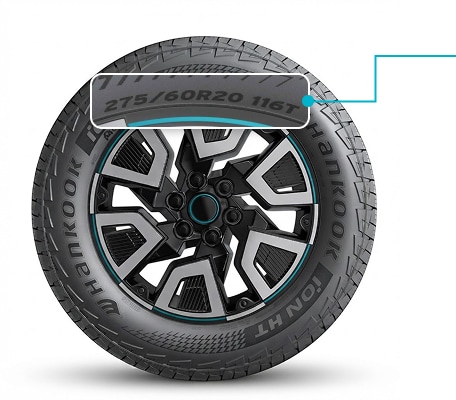
How to Read Tire Size and Service Descriptions
275 / 60R20 116T
- 275 Tire width in millimeters
- 60 Aspect ratio: sidewall height as a percentage of tire width
- R Radial construction
- 20 Rim diameter in inches
- 116 Load index: a code corresponding to maximum load capacity
- T Speed rating under specified conditions
Always use the tire size, load index, speed rating, and cold inflation pressure specified by the vehicle manufacturer.
02
How Do You Choose EV Tires for Your Local Climate?
Choose tires based on the most demanding seasonal and road conditions you regularly encounter, not simply today's weather. Among tires that meet your vehicle manufacturer's specifications, compare summer, all-season, all-weather, and winter options based on local temperatures, precipitation, snowfall frequency, and the likelihood of icy roads.
-

Hot, dry regions with mild winter temperatures
Consider summer or all-season EV tires suited to warmer conditions. Summer tires are not designed for use in freezing temperatures or on snow and ice.
-

Relatively mild regions with little snowfall
All-season EV tires may provide a practical year-round option. However, an M+S designation alone does not indicate that a tire meets severe-snow performance requirements.
-

Regions with occasional snow where seasonal tire changes are less practical
Consider an all-weather tire bearing the 3PMSF symbol. Snow, wet-road, and dry-road performance can vary by product, so compare the specifications for the exact tire you are considering.
-

Regions with frequent snow and prolonged cold
Winter tires bearing the 3PMSF symbol are generally the more suitable choice. If you regularly drive on ice, do not rely on the 3PMSF symbol alone; check the tire's product-specific ice braking and traction performance as well.
For colder climates, an EV-specific winter tire can be a strong first choice because it is developed around both winter road conditions and EV-related demands such as vehicle load, immediate torque, energy efficiency, and noise.
The Detail
The Three-Peak Mountain Snowflake (3PMSF) symbol indicates that a tire has met defined traction-performance requirements for severe-snow use under specified test conditions. However, the symbol does not mean that every aspect of winter performance—such as ice braking, wet braking, or cornering—has been evaluated.
The M+S (Mud & Snow) designation is primarily based on tread-design characteristics and does not represent the same performance-based severe-snow standard as the 3PMSF symbol.
For relatively mild regions with little snowfall, consider the Hankook iON evo AS, an all-season EV tire. For regions with freezing temperatures and frequent snow, consider the Hankook iON i*cept, an EV-specific winter tire bearing the 3PMSF symbol.
Whatever product you choose, confirm the seasonal performance, load index, speed rating, and vehicle fitment for the exact tire size you plan to purchase.
-

3PMSF — Three-Peak Mountain Snowflake
(Alpine Symbol)Meets a defined snow-traction threshold in a standardized test on medium-packed snow.
-

M+S
Based primarily on tread-design criteria. It does not require the same performance-based snow-traction test.
3PMSF addresses snow traction under specified test conditions. Also review ice, wet-road and other winter-performance information.
03
Why Does Wet-Road Performance Matter When Choosing EV Tires?
Wet-road performance is important for every vehicle, including EVs. Low rolling resistance can help support energy efficiency and driving range. However, it should not be considered alone. Water between the tire and road surface can reduce available grip, potentially affecting braking performance and vehicle control. When choosing EV tires, compare wet grip and braking performance alongside rolling resistance and energy efficiency.
For tires sold in the United States, the UTQG traction grade indicates straight-ahead wet braking traction measured under controlled conditions. Grades range from AA to C, but the test does not evaluate acceleration, cornering, hydroplaning, or peak traction. Check the UTQG grade together with the detailed specifications and available test information for the tire you are considering. Performance ratings and technologies can vary by product and tire size, so always check the specifications for the exact size you plan to purchase. Hankook’s iON Innovative Technology system includes i Perfect Grip, a group of technologies developed with EV grip and handling performance in mind. Actual wet- and dry-road performance and technology applications can vary by iON product and tire size, so check the specifications for the exact product you are considering.
Source 49 CFR §575.104, Uniform Tire Quality Grading Standards Hankook iON Innovative Technology and iON product specifications
Understanding UTQG Traction Grades
UTQG Traction indicates straight-line braking traction on specified wet test surfaces.
- AA Highest UTQG traction grade
- A Second-highest grade
- B Lower traction grade
- C Minimum grade under the standard
UTQG Traction does not evaluate cornering, hydroplaning resistance, dry-road grip or overall tire suitability.
How iON ratings differ
Selected iON evo sizes: UTQG Traction of AA. Ratings may vary by product and tire size, so check the exact specification for the applicable product and tire size.
Source 49 CFR §575.104 NHTSA TireWise Hankook iON product specifications
04
Do You Really Need EV-Specific Tires?
EV-specific tires are not a legal requirement, but they are engineered to address the particular performance demands of electric vehicles. EV tires are designed to balance multiple characteristics in a single tire including load-carrying capability for heavier vehicles, grip and durability for immediate torque, low rolling resistance to support energy efficiency, and noise-reduction technologies for a quieter ride. Before buying any replacement tire always confirm the tire size, load index, speed rating, and other specifications required by your vehicle manufacturer.
05
How Should You Compare Price and Mileage Warranty?
Consider long-term value and mileage warranty coverage alongside the tire’s initial purchase price. A longer mileage warranty covers more miles, but actual tire life depends on driving conditions, maintenance and vehicle characteristics. Lower rolling resistance reduces the energy lost while the tire rolls, which can support vehicle energy efficiency. Compare the purchase price with mileage warranty coverage and the performance characteristics that matter most to you.
What Is a Mileage Warranty?
A mileage warranty provides coverage for a specified number of miles under the manufacturer's defined conditions. It can be useful when comparing the long-term value of different tires, but it should not be interpreted as a guarantee of actual tire life. Actual tread life varies based on driving habits, vehicle condition, road conditions, climate, inflation pressure, tire rotation, and other maintenance factors.
Mileage Warranties for Select Hankook iON Products
| Product | Mileage Warranty |
|---|---|
| iON evo AS | 55,000 miles |
| iON evo | 30,000 miles |
| iON i*cept | 30,000 miles |
| iON HT | 80,000 miles |
A Simple Way to Compare
Comparing purchase price and mileage warranty coverage side by side can provide one reference point for evaluating long-term value. Keep in mind that a mileage warranty covers a specified number of miles under the manufacturer's defined conditions and does not guarantee actual tire life. Rolling resistance is another factor to consider because lower rolling resistance reduces energy loss as the tire rolls, which can support vehicle energy efficiency.
- Mileage warranty: A longer mileage warranty covers more miles, but does not guarantee actual tire life.
- Rolling resistance: Lower rolling resistance reduces the energy lost while the tire rolls, which can support vehicle energy efficiency.
Hankook iON Options by Driving Need
-
Everyday driving in a mild climate
Performance considerations
- All-season balance
- Low noise
Recommended product

-
High-performance EVs in summer
Performance considerations
- Dry and wet-road grip
Recommended product

-
Winter snow
Performance considerations
- 3PMSF Symbol
Recommended product

iON Series Highlights
Hankook iON tires are engineered specifically for electric vehicles, with technologies designed to balance quietness, tread life, grip, and energy efficiency.
-
i Sound Absorber: A Quieter Ride
Because electric vehicles produce little to no engine noise, tire and road noise can become more noticeable inside the cabin. Hankook's i Sound Absorber technology uses sound-absorbing foam inside the tire to help reduce tire cavity noise. Noise Guard Technology and Opti Pitch Technology further help minimize tire noise for a quieter ride. In testing conducted according to Hankook Tire's test standards, i Sound Absorber technology reduced tire cavity noise by up to 9 dB.
-
i Super Mileage: Optimized Wear Performance
The additional weight and immediate torque of an electric vehicle can place greater demands on its tires. Hankook's i Super Mileage technology incorporates Round Even Technology to distribute contact pressure more evenly across the road surface, helping reduce uneven wear and support more uniform tread wear. Opti-Tread Technology and ProDurable Compound are also designed to support durability and even wear under the loads and driving forces associated with EVs.
-
i Perfect Grip: Wet & Dry Braking Performance
The additional weight and immediate torque of electric vehicles place particular demands on tire grip and steering stability. Hankook's i Perfect Grip technology is designed to support confident grip and braking performance on both wet and dry roads. Grip Boost Technology and an Aramid Hybrid Reinforcement Belt help support handling at higher speeds and through corners. TÜV SÜD testing evaluated wet- and dry-road braking performance under specified test conditions.
-
i Extreme Lightness: Weight & Rolling Resistance Optimization
Hankook's i Extreme Lightness technology is designed to reduce tire weight and rolling resistance, helping minimize energy loss and support EV battery efficiency and driving range.
Recommended Hankook EV tires (iON range)
-
iON evo AS: A Balanced All-Season EV Tire
The iON evo AS is an EV-specific all-season tire designed for year-round performance, from everyday commuting to longer trips. It supports stable driving on both dry and wet roads and suits drivers who want long mileage, quietness, and balanced handling.
See full product details -
iON evo: A Summer Performance EV Tire
The iON evo is an EV-specific summer performance tire engineered for the acceleration and torque of high-performance electric vehicles. It delivers outstanding grip, precise handling, and excellent wet and dry braking performance. Select sizes are supplied as original equipment for the Porsche Taycan.
See full product details -
iON i*cept: A Winter EV Tire (with the 3PMSF Symbol)
The iON i*cept is an EV-specific winter tire designed for cold temperatures and snow-covered roads while addressing the additional weight and immediate torque of electric vehicles. It bears the 3PMSF (Three-Peak Mountain Snowflake) symbol and combines winter grip and braking performance with a low-rolling-resistance design that also considers energy efficiency.
See full product details


Pre-Purchase Checklist
- Confirm the tire size specified by the vehicle manufacturer.
- Confirm the cold inflation pressure listed on the door placard.
- Confirm the required load index, speed rating, and any XL or HL requirements.
- Consider rolling resistance if driving range is a priority.
- Where applicable, check the UTQG Traction grade (AA/A/B/C).
- Review treadwear performance and mileage warranty terms.
- Look for the 3PMSF symbol if you regularly drive in snow.
- Consider noise-reduction technologies if a quiet ride is a priority.
Watch: How to Choose and Use EV Tires
(Hankook iON A to Z guide)
This Hankook guide walks through choosing and using iON EV tires step by step, including how to read the sidewall ratings, match a tire to your climate, and consider factors such as range, grip, noise and cost.
Frequently Asked Questions
-
Q1. How Often Do EV Tires Need to Be Replaced?
A. There is no single replacement interval for EV tires. Because EVs can be heavier than comparable internal-combustion-engine vehicles and deliver immediate torque, they can place greater demands on their tires. Inspect tread depth and tire condition regularly, and follow the maintenance recommendations provided by the vehicle and tire manufacturers. Regular tire rotation, when appropriate for your vehicle and tire configuration, and proper wheel alignment can also help promote even wear and maximize tire life.
-
Q2. Do Electric Vehicles Need Different Tire Pressures?
A. Do not use a different tire pressure simply because you drive an EV. Always follow the cold tire inflation pressure specified by the vehicle manufacturer. You can typically find this information on the Tire and Loading Information placard on the driver’s-side door jamb. Maintaining the recommended pressure helps support energy efficiency, even tread wear, and vehicle handling. Underinflation increases rolling resistance, which can reduce driving range and contribute to uneven wear. Check the pressure once a month and before long trips, while the tires are cold.
-
Q3. Can You Use EV-Specific Tires and Regular Tires Together?
A. For the most consistent performance, follow your vehicle manufacturer’s recommendations regarding replacement tires and tire matching. Mixing EV-specific tires and regular tires can change the balance of grip, wear, noise, and handling performance. Because an electric vehicle can be heavier and deliver immediate torque, this mismatch may be more noticeable on some vehicles. If only two tires need replacement, consult your vehicle manufacturer’s recommendations and your tire dealer regarding appropriate tire selection and placement.
References
- NHTSA TireWise Tire selection, size, inflation pressure and maintenance
- 49 CFR §571.110 Tire Selection and Rims
- 49 CFR §575.104 Uniform Tire Quality Grading Standards (UTQG)
- USTMA Tire safety and winter tire information
- Hankook Tire USA — iON iON product and technology information
- TÜV SÜD Applicable test documentation and results
-
Hankook Tire Powers EV Strategy at Demo Days Bay Area
-
Hankook Tire Wins Three Awards in the Product Design Category at the ‘2026 Red Dot Design Award’
-
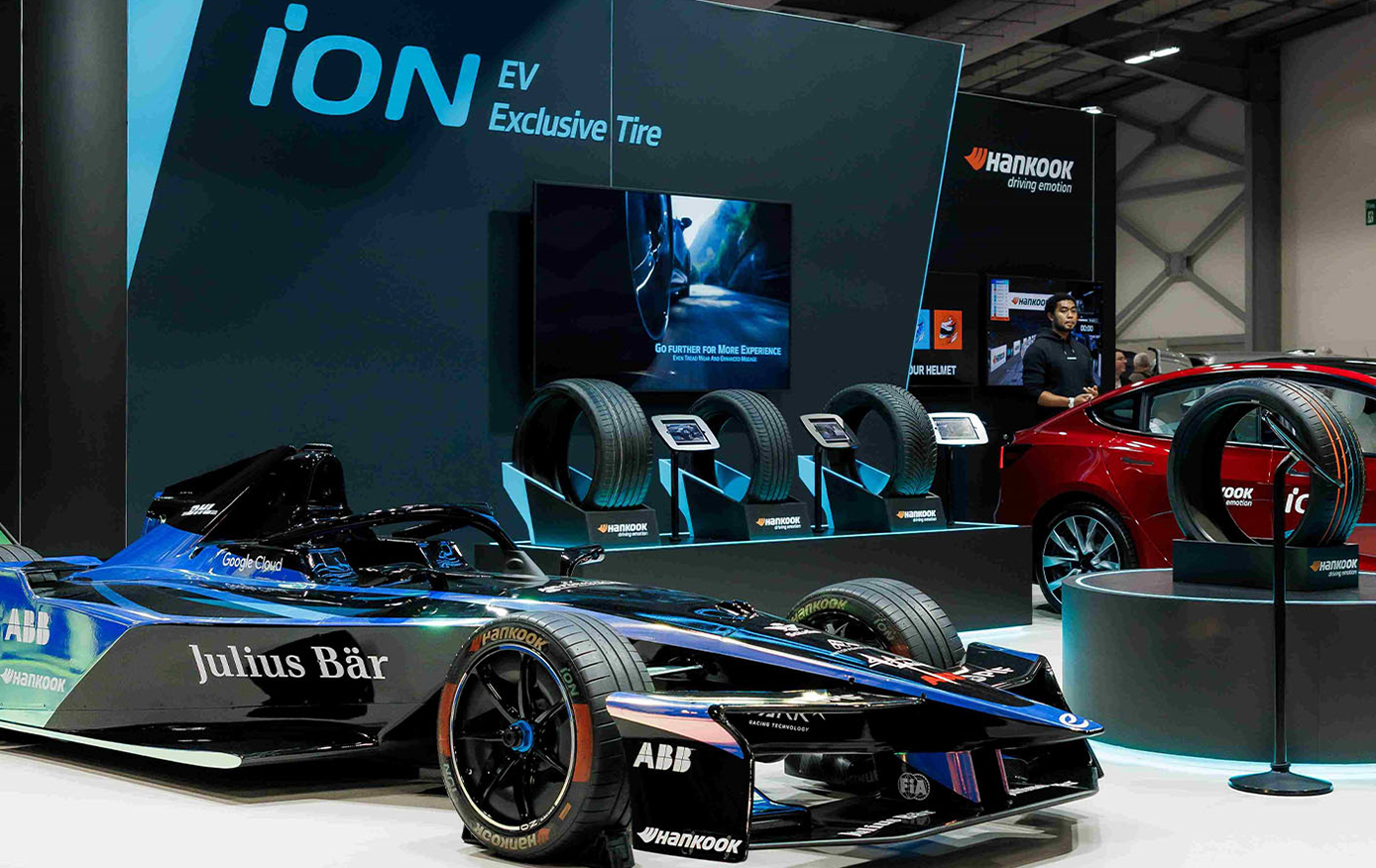
Hankook Tire to Participate in ‘Everything Electric UK 2026’
-
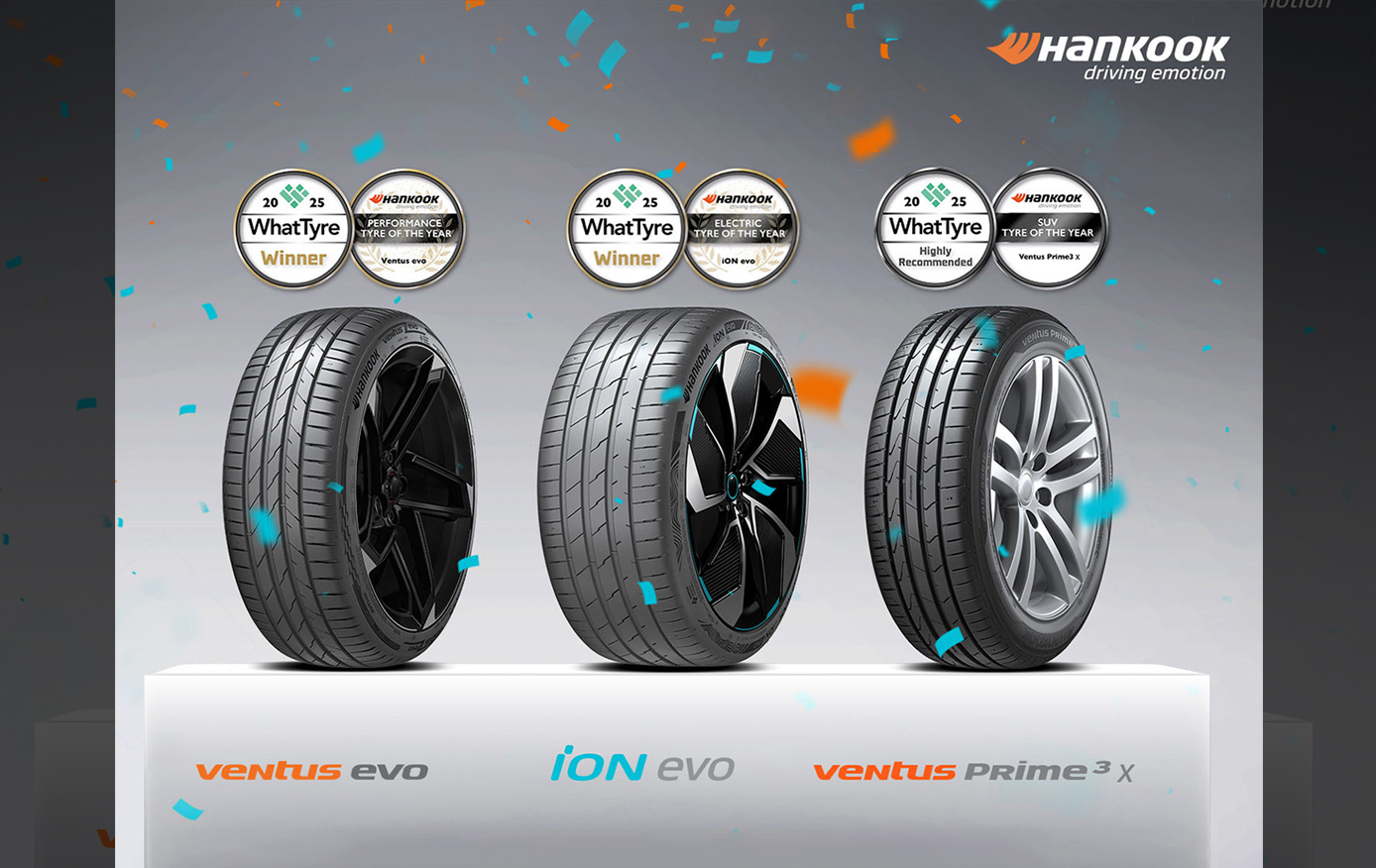
Hankook wins “Performance Tire of the Year” and “Electric Tire of the Year” Awards in the 2025 WhatTyre Awards