 Global Site
Remediation of Loss of Income
HKCA has not identified any loss of income to the most vulnerable families that results from any measure taken to eliminate the use of forced labour or child labour in our activities and supply chains.

Searching
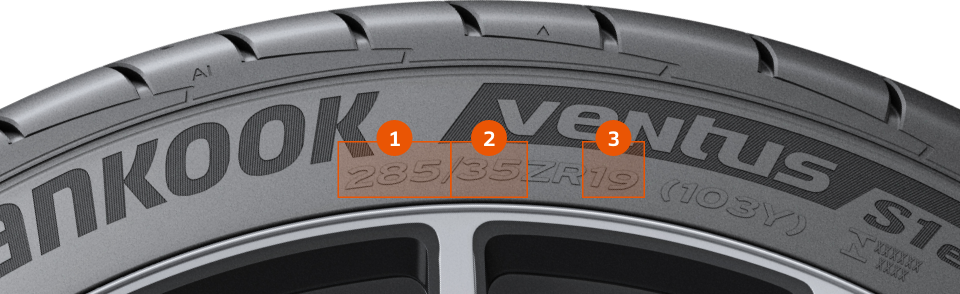
Want to know the size of your tires?
You can find size data on the side of the tire.
(FY2025)
This report is submitted on behalf of Hankook Tire Canada Corp. (“HKCA”) in compliance with the Fighting Against Forced Labour and Child Labour in Supply Chains Act (the "Act") for the fiscal year ending December 31, 2025.
HKCA complies with the corporate practices of its parent company, Hankook Tire & Technology (“HTT”). We recognize the importance of human rights as a universal value and the potential to act on this value in our day-to-day business operations. In making our human rights management declaration, we commit to respecting and protecting the human rights of all workers (permanent, contract, temporary, and foreign and migrant workers), employees of business partners and suppliers, customers, local communities, and all other stakeholders who interact with us through our products, services, and business activities.
Furthermore, we will ensure that we endorse and honour the international human rights protection principles and that we are not involved in any human rights violation. As a company that fulfills its social responsibility and pursues the satisfaction of all its stakeholders, we will respect and safeguard human rights under all circumstances to promote the wholesome development of our society.
HKCA is a business entity that imports and supplies tires within Canada. HKCA's ultimate parent company, HTT, is located in Seoul, Republic of Korea with eight (8) production facilities in five (5) countries (Korea, China, USA, Hungary, and Indonesia). There is no production facility in Canada.
HKCA imports tires produced exclusively at the production facilities owned and operated by HTT. Tires produced from overseas facilities are imported to Canada via Ocean Carrier. We request that our suppliers perform ESG self-assessments to continuously evaluate their ESG capabilities and enhance their own ESG management.
HKCA employs 3PL warehouse management services in the provinces of Alberta (Calgary) and Ontario (Brampton). Apps Cargo (AB) and Glovis (ON) employ staff in the warehouse and handle delivery on behalf of Hankook. Adhering to our HR declaration, we uphold our business partners to the same ethical labour practices.
The policy on Forced and Child Labour that HKCA adheres to, which is in line with HTT’s practices, is as follows:
1. Human Rights Management Policy: HTT endorses and respects the protection of internationally proclaimed human rights and fully endeavors to avoid any involvement in the human rights violations. This declaration and principle apply to all workers (Contract workers, temporary workers, foreign workers, migrant workers, etc.) of all global business sites of HTT (including subsidiaries), as well as all stakeholders we encounter through our business activities, including partners, customers, and local communities. Human rights management principles include the following: (1) Prohibition of Forced Labour, (2) Prohibition of Child Labour, (3) Respect for diversity, equity, inclusion and non-discrimination, (4) Gender Equality Achievement, (5) Guarantee of Freedom of Association and the Right to Collective Bargaining, (6) Decent Wage Payment and Stabilization of Livelihood, (7) Compliance with Working Hour Regulations, (8) Health and Safety.
This prohibits all forms of forced labour that unjustly restrict physical or mental freedom. It also prohibits child labour, adhering to the legal minimum employment age in the relevant country, and commits to ensuring that no harmful or hazardous work is assigned to employees under the age of eighteen (18) in compliance with health and safety standards.
2. Code of Conduct: HTT has established an ethical code of conduct to ensure compliance with domestic and international laws and company management policies, and to practice ethical management. The ethical code applies to all stakeholders, including employees and suppliers.
3. Supply Chain Policies: HTT operates the following key policies to support a sustainable supply chain: the Sustainable Purchasing Policy, which specifies the Company’s responsibility to respect human rights and labour rights within its supply chain; the Supplier Code of Conduct, which sets out expectations regarding suppliers’ respect for and protection of human rights; and the Global Sustainable Purchasing Policy, which addresses the respect for and protection of human rights and the minimization of adverse impacts in the natural rubber supply chain, one of the Company’s principal raw material supply chains. In addition, the Company has established a Conflict Minerals Policy, which prohibits the sourcing of raw materials from conflict-affected regions where human rights are seriously threatened.
HTT continuously works to identify the human rights impacts across all its business activities, including those of HKCA, and we strive to mitigate and prevent these impacts. Additionally, we operate grievance mechanisms through which all stakeholders within our supply chain can raise concerns and receive access to remedy.
1. Risk Identification and Mitigation
- Human Rights Impact Assessment: We conduct annual human rights impact assessments throughout all global operations (Headquarters, domestic/overseas plants, R&D Center, and overseas subsidiaries and offices). By conducting annual assessments, we aim to proactively identify human rights concerns that may adversely impact all employees and stakeholders and make improvements on identified issues to protect human rights. We analyzed the human rights grievances collected over the past two years to select vulnerable areas and developed an indepth questionnaire specific to our human rights conditions. The human rights risks identified through the assessment are shared with HR and relevant teams, who develop action plans and continue monitoring the situation.
- Supplier Assessment: HTT continuously monitors the ESG capabilities of its global suppliers and requests them to conduct self-assessments for ESG improvement. This assessment includes aspects of human rights and workers' rights protection. In 2025, 432 suppliers (raw materials, sub-materials, and equipment) underwent ESG assessments, achieving a 100% response rate. If a supplier is identified as high-risk, the company requests follow-up management and the development of improvement plans. In cases where severe risks are identified, penalties are applied in business transactions.
2. Grievance Mechanism
- Grievance Committee: We operate a grievance mechanism to resolve employee grievances, prevent disputes in the workplace to ultimately create a positive corporate culture. This mechanism helps us heed employee grievances through various channels and seek solutions to protect the human rights of workers and build a wholesome working environment. Our employees are free to request improvement actions for discriminatory treatment, sexual harassment in the workplace, unjustified actions taken in relation to parental leave, workplace harassment, or any other personal grievances in their professional and personal life.
- Ethics Reporting: Ethics reporting provides all stakeholders of HTT with a channel to report issues across the supply chain, wrong practices or policies, and misconduct by employees. The identity of the whistleblower and the content of the report are strictly confidential, and the whistleblower will not face any disadvantage because of their report.
According to the human rights impact assessments and supplier evaluations conducted by HTT, the parent company of HKCA, no significant human rights issues were identified within the supply chain. However, to proactively address and prevent the risks of forced and child labour as a matter of principle, we conduct the following risk assessments and management processes, particularly for natural rubber and conflict minerals. For the natural rubber supply chain, we have conducted a supply chain ESG assessment based on GPSNR (Global Platform for Sustainable Natural Rubber) standards. More recently, we have advanced our system for origin information management and ensuring traceability within the supply chain, with a focus on building a response framework for the EUDR (European Union Deforestation Regulation), which addresses deforestation risks in supply chains, and continuing to prevent and manage human rights risks such as forced and child labour within the supply chain. In addition, HTT employs a responsible sourcing system throughout its supply chain that includes not only 3TG (tin, tantalum, tungsten, and gold) but also responsible minerals such as cobalt, mica, and copper. The company conducts annual conflict mineral verification and risk assessments to avoid using minerals associated with human rights violations or labour exploitation in conflict-affected and high-risk areas (CAHRAs) and has established and publicly disclosed relevant policies on its official website.
HKCA has not identified forced labour or child labour risks in our supply chain, therefore no remediation measures have been taken.
HKCA has not identified any loss of income to the most vulnerable families that results from any measure taken to eliminate the use of forced labour or child labour in our activities and supply chains.
HKCA as a subsidiary of HTT endorses and respects the protection of internationally proclaimed human rights, and endeavors to avoid any involvement in human rights violations.
HKCA has developed and conducts a training program in alignment with the Ethics and Compliance guidelines as well as the Human Rights Code of Canada. The training is to be conducted during the onboarding process and will require employees to take part when there are significant changes to the policy.
We assess the effectiveness of our efforts to prevent forced and child labour using a variety of methods. These include the management of annual risk assessment results, the operation of monitoring systems, and the collection of feedback from external stakeholders. By integrating these results into our management system, we will continue to strengthen our efforts toward the prevention and eradication of forced and child labour within our supply chain.
In accordance with the requirements of the Act, and in particular section 11 thereof, I attest that I have reviewed the information contained in the report for Hankook Tire Canada Corp. Based on my knowledge, and having exercised reasonable diligence, I attest that the information in the report is true, accurate and complete in all material respects as defined for the purposes of the Act, for the reporting year listed above.

Youngseob Yun
Managing Director, Hankook Tire Canada Corp.
The submission has been completed.
Failed to send mail.