A future that removes air and adds innovation | Hankook Tyre Australia go to main prd
  • Brand
  • High-Tech

A future that removes air and adds innovation

Tyres play a critical role in the performance and safety of an automobile. Today, pneumatic tyres are taken for granted as they are used in numerous modes of transportation, which started with bicycles in the late 19th century. But, tyres of the future may no longer need air.
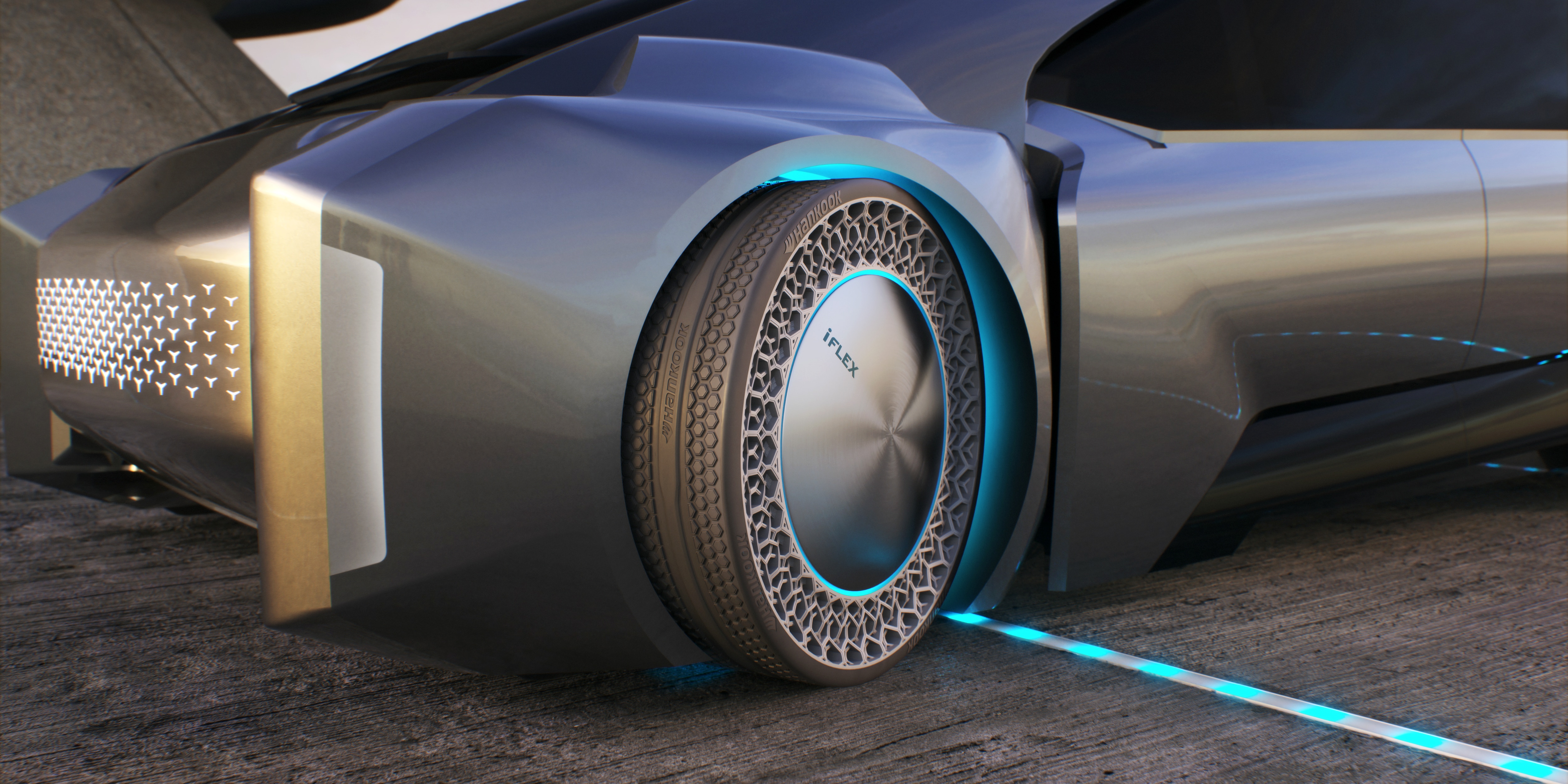
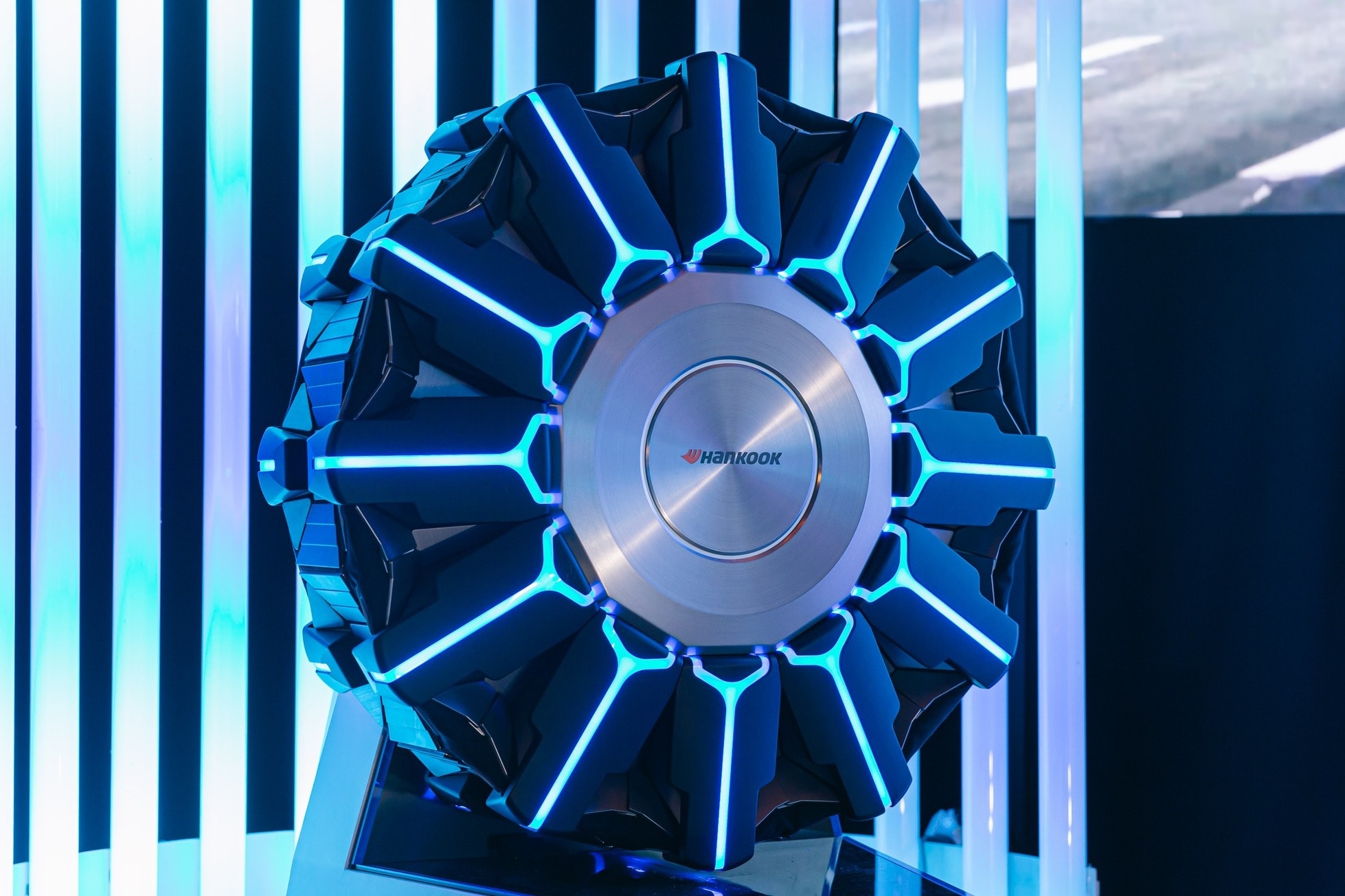
  • Key visual of iFLEX, a non-pneumatic tyre optimised for autonomous driving mobility presented at CES 2022

Among the numerous components of a car, a tyre is the only one that comes into contact with the road surface, playing a crucial role in providing a safe driving experience. As long as a vehicle runs and creates friction with the road surface regardless of advancements in power sources, control devices, or design, tyres will continue to play a vital role. Even with futuristic concepts like 'flying cars,' like an airplane, the tyre will still play an integral role acting as landing gear.

In the mid-1800s, a whole rubber structure replaced the iron rim and leather materials on wooden wheels and for the past several decades, the tyre has continued to evolve based on innovation centred on two key elements: rubber and air. While injecting air into a rubber tube has been utilised for some time, there is anticipation that someday , air in tyres may just be in history books. The emergence of the Non-Pneumatic Tyre (NPT), also called an ‘airless tyre,’ is expected to become a mainstay of future mobility.

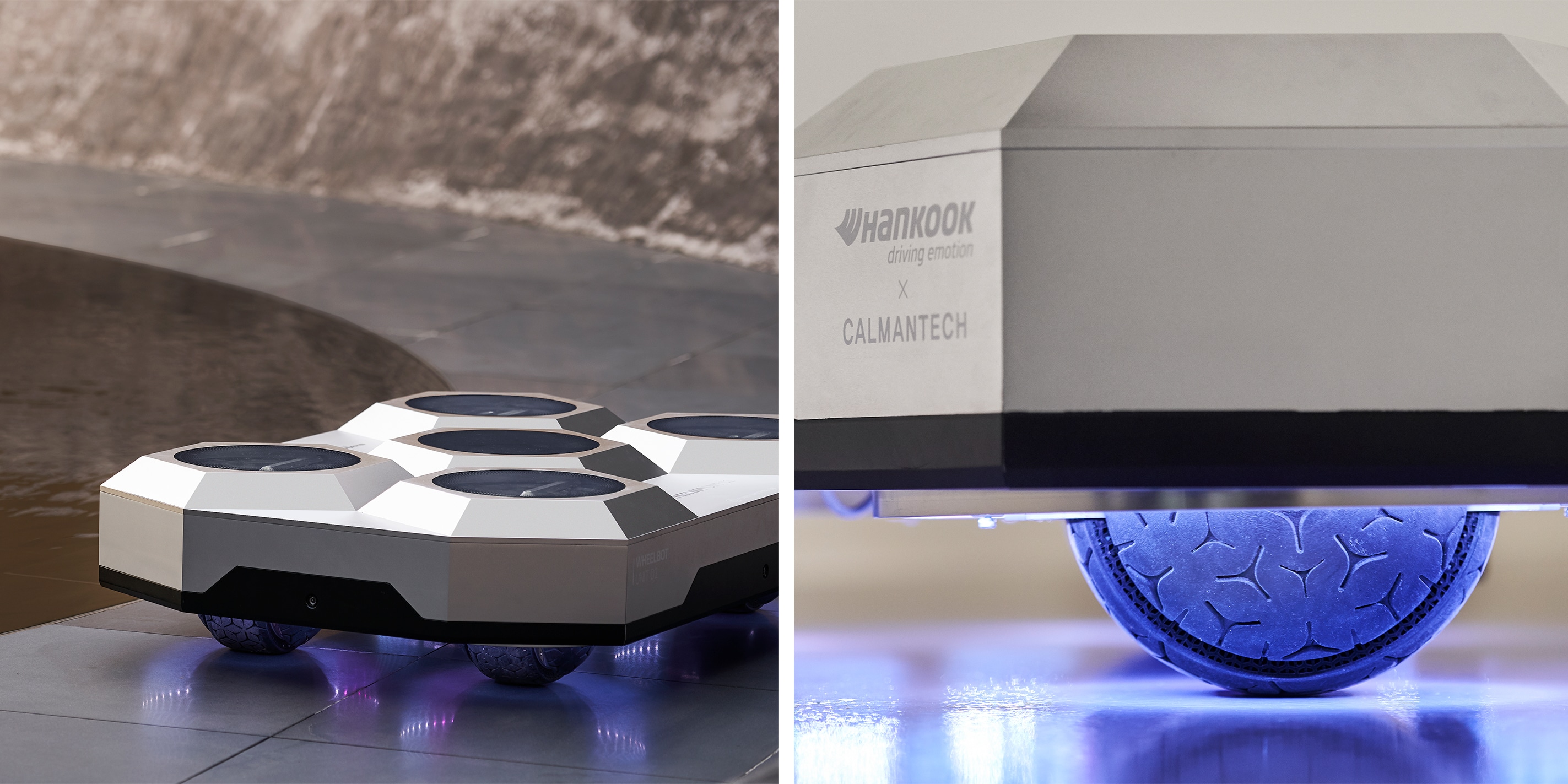
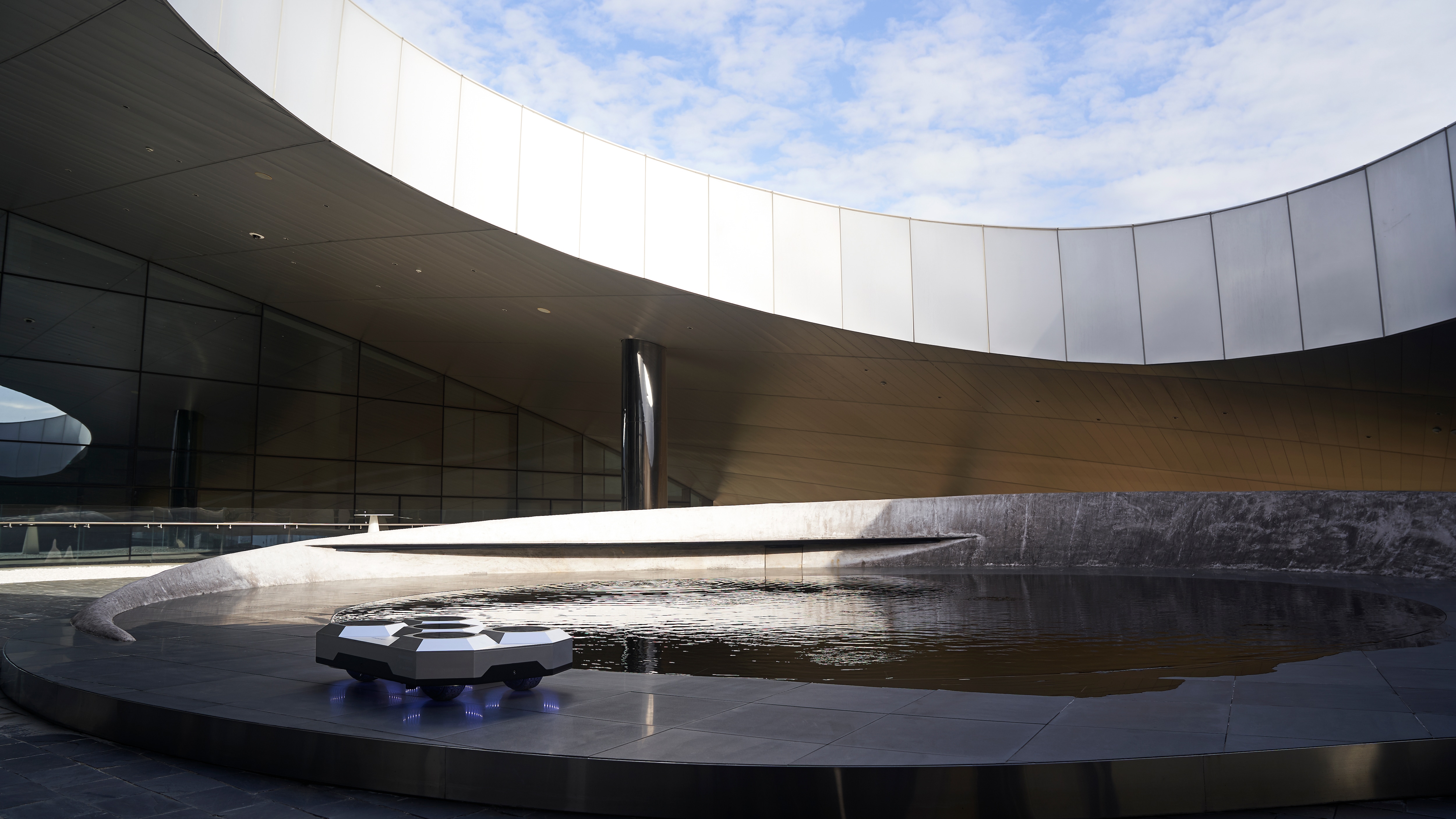
Wheelbot, the core of the future transportation method ‘Spatial Mobility SSM’, which is the result of ‘Hankook Tire Design Innovation 2022’, also utilised non-pneumatic tyre technology.

Tyres with completely different structures

The only time a driver notices a difference in ride quality during their daily drive is when they change the tyres. Even in a car driven consistently for years, the difference in the ride becomes palpable when the tyres are changed and can even cause the sensation of driving a new car. Even adjusting the air pressure at a service centre can induce a noticeable change in the driving experience. As such, the current role of air in a tyre is undeniably important.

Each tyre has an optimal air pressure setting and adjustments to the air based on seasonal changes or driving environment are necessary for good car maintenance. The process to maintain optimal air pressure settings do have inconveniences associated with the process, but there is reason to believe that this may disappear in the future.

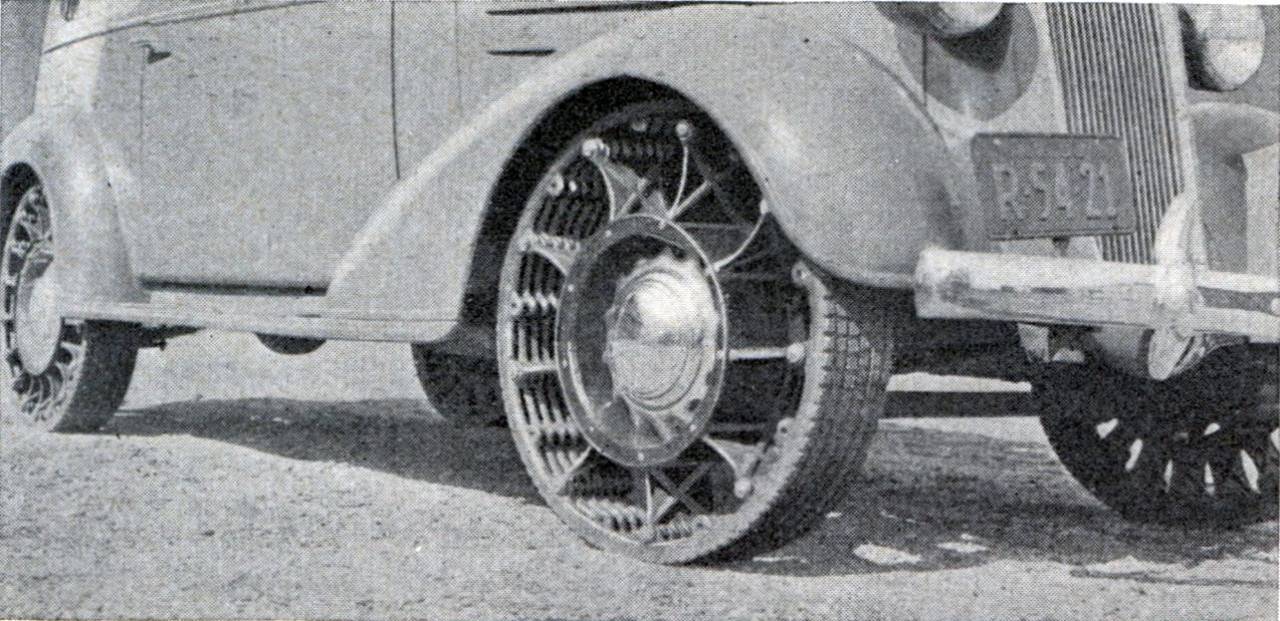
J. V. Martin's airless safety tyre was featured in the May 1938 issue of Popular Science.

Non-pneumatic tyres have received steady attention since 1938 when J. V. Martin of the United States introduced a safety tyre supported by an X-shaped spoke. The actual development of these kind of automobile tyres didn’t commence until the 2000s however. Hankook Tire began developing its own non-pneumatic tyre in earnest in 2010 and introduced iFlex, it’s first non-pneumatic tyre, at the 2012 Busan International Motor Show and the Ministry of Knowledge Economy R&D Performance Exhibition.

In 2015, Hankook Tire introduced Korea's first non-pneumatic tyre that can be installed on mass-produced passenger cars and drive at high speeds. The prototype tyre made of urethane material was recognized for its technological prowess in terms of performance and stability through a 130 km/h high-speed driving test, a lateral rigidity stability test, a 100 km/h actual vehicle driving test, and a slalom driving test comparable to regular tyres. Later in 2022, a further evolved iFlex model was introduced that can be applied to military vehicles and utilised in autonomous mobility.

Hankook Tire, which continues to invest in non-pneumatic tyre innovation, took the Winner at the 2021 iF Design Award by applying the 11” non-pneumatic tyre to the future mobility concept of its affiliate Model Solutions. The company also won the 2021 iF Concept Category Winner with the automobile tyre, ‘HPS-Cell,’ design based on a future non-pneumatic tyre, and swept the 2021 Red Dot Award Winner and 2021 IDEA Finalist.

The non-pneumatic tyre mounted on HPS-Cell, a futuristic mobility platform based on the tyre, the essence of mobility, has a structure in the form of a three-dimensional unit cell.
It also contains possible future technology as it is a non-pneumatic tyre. In other words, it is a concept that utilizes variable wheel and sensor technology to identify the tyre surface and road conditions in real time and replaces the tyre surface with an optimal tread pattern in response to the risk of wear.

  • HPS Cell, a tyre-based platform which is the essence of mobility, with Hankook Tire’s cutting-edge technology ‘H.I.P (Hankook Innovative Performance)’ applied as part of the ‘Design Innovation 2020’ project

Conventional tyres support the weight of the vehicle and maintain traction on the road with properly maintained air pressure. However, as is widely acknowledged, low pressure may cause a problem with driving stability due to reduced traction, thus requiring that tyres and air pressure be checked and managed periodically. While driving, vehicles are also susceptible to unexpected foreign objects leading to accidents where air pressure is lost due to a puncture.

Beyond the general inconvenience to consumers, waste tyres that have reached the end of their service life must also be disposed of with care to lessen the environmental impact. Globally, the annual waste tyre emission is estimated to exceed 1 billion. According to an announcement by the Korea Tyre Industry Association, domestic waste tyre generation in 2022 was projected to reach 370,000 tons, with an expected recycling performance of 329,000 tons.

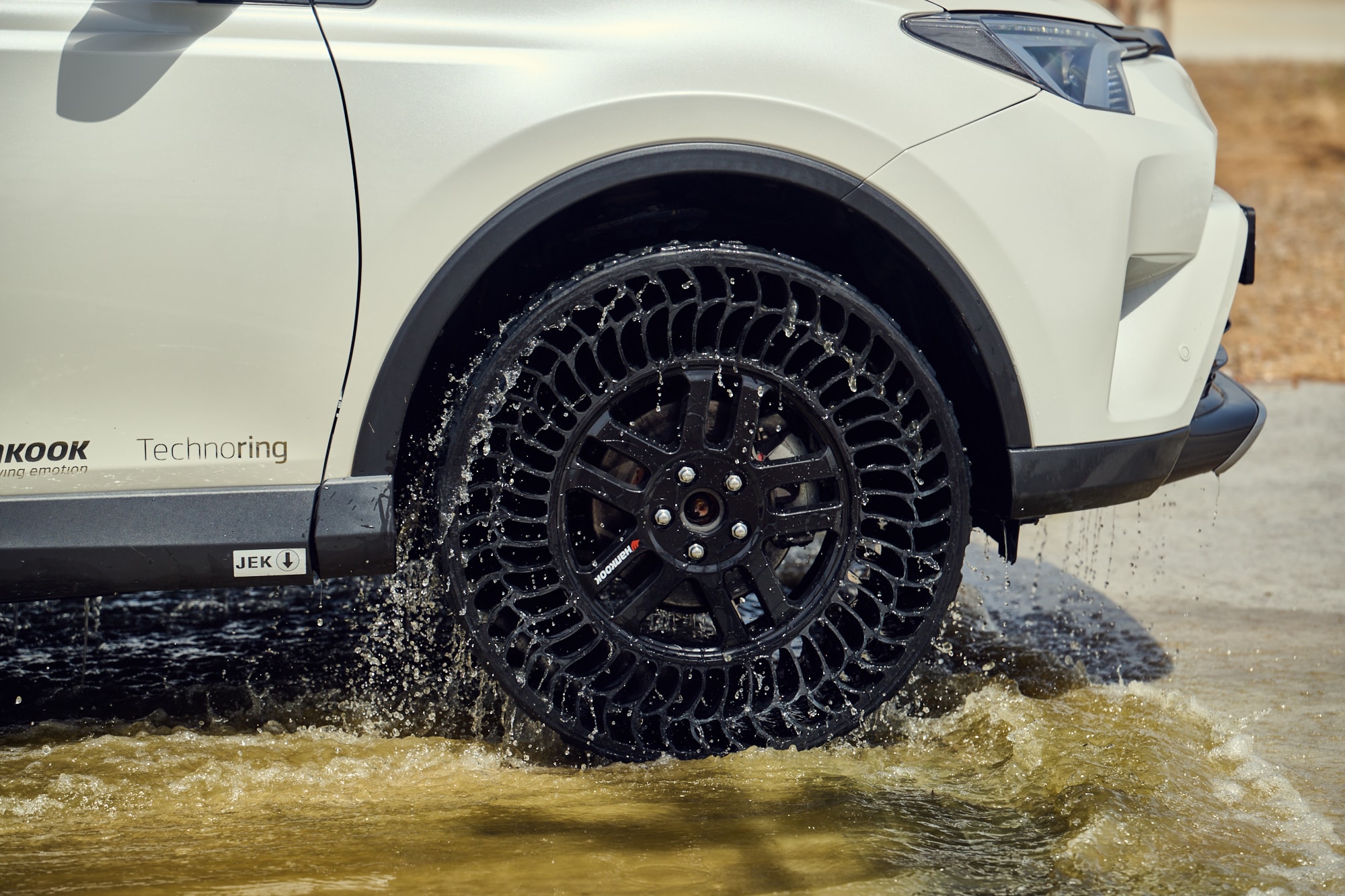
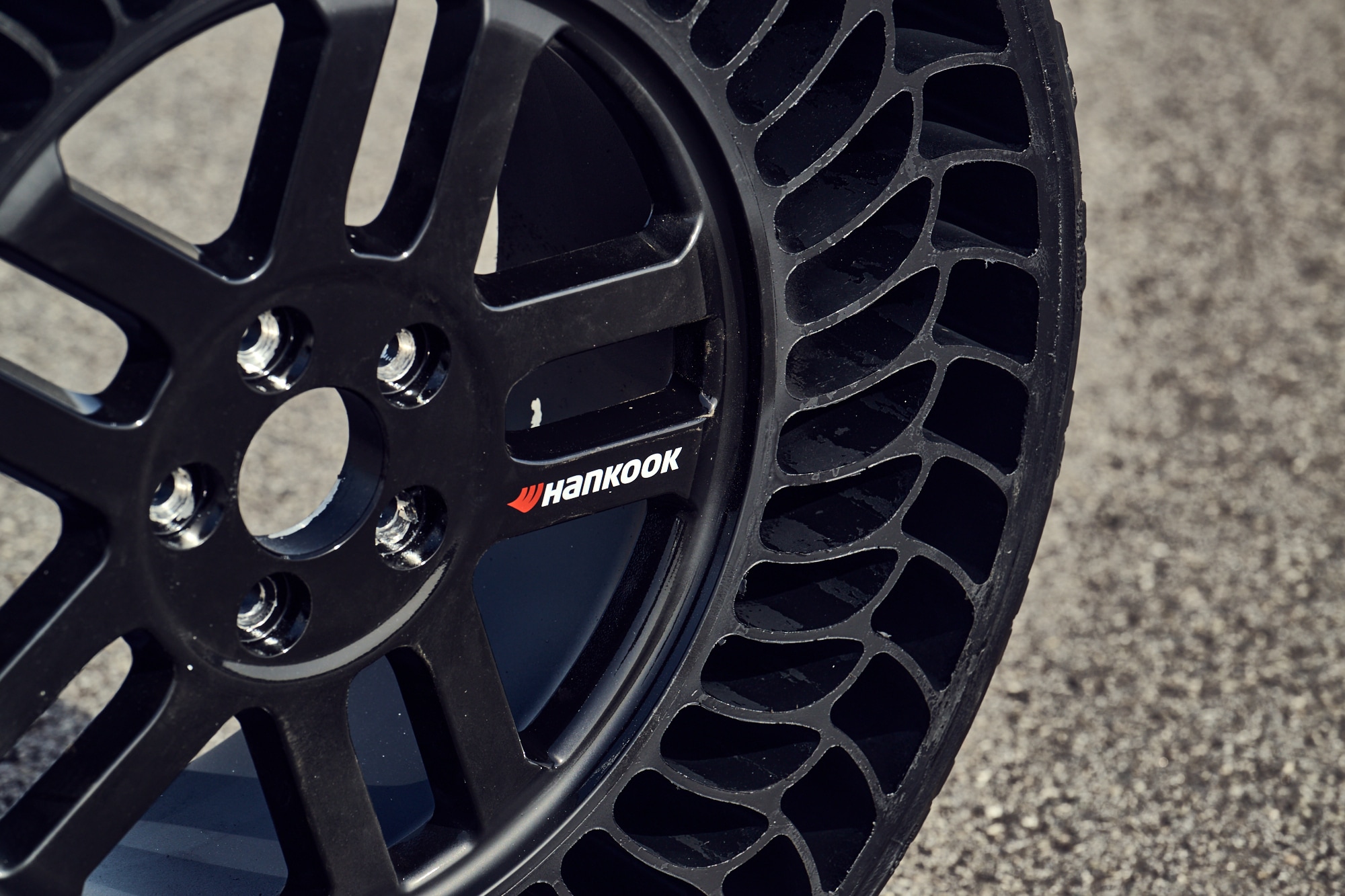
The non-pneumatic tyre, which is developed to overcome the shortcomings of regular tyres, literally refers to a tyre which can support a vehicle without the injection of any air inside. The design of the circular rotating body centred on the axis is the same, but the structure between the wheel and the tread is completely different. A non-pneumatic tyre supports the vehicle load through the structural shape of the spoke. The spoke also plays the role of shock absorption from the road surface and shape restoration of the tyre.

As it contains no air inside, the structure of the tyre can never collapse and the risk of puncture is also eliminated. There is no need to regularly check and adjust the air pressure, making the tyre easier to maintain and manage. There is no loss of fuel efficiency due to low air pressure, and noise is also significantly reduced. Based on these advantages, non-pneumatic tyres are currently being put into practical use on some bicycles, golf carts, and small forklifts.

A universe without air, a tyre without air

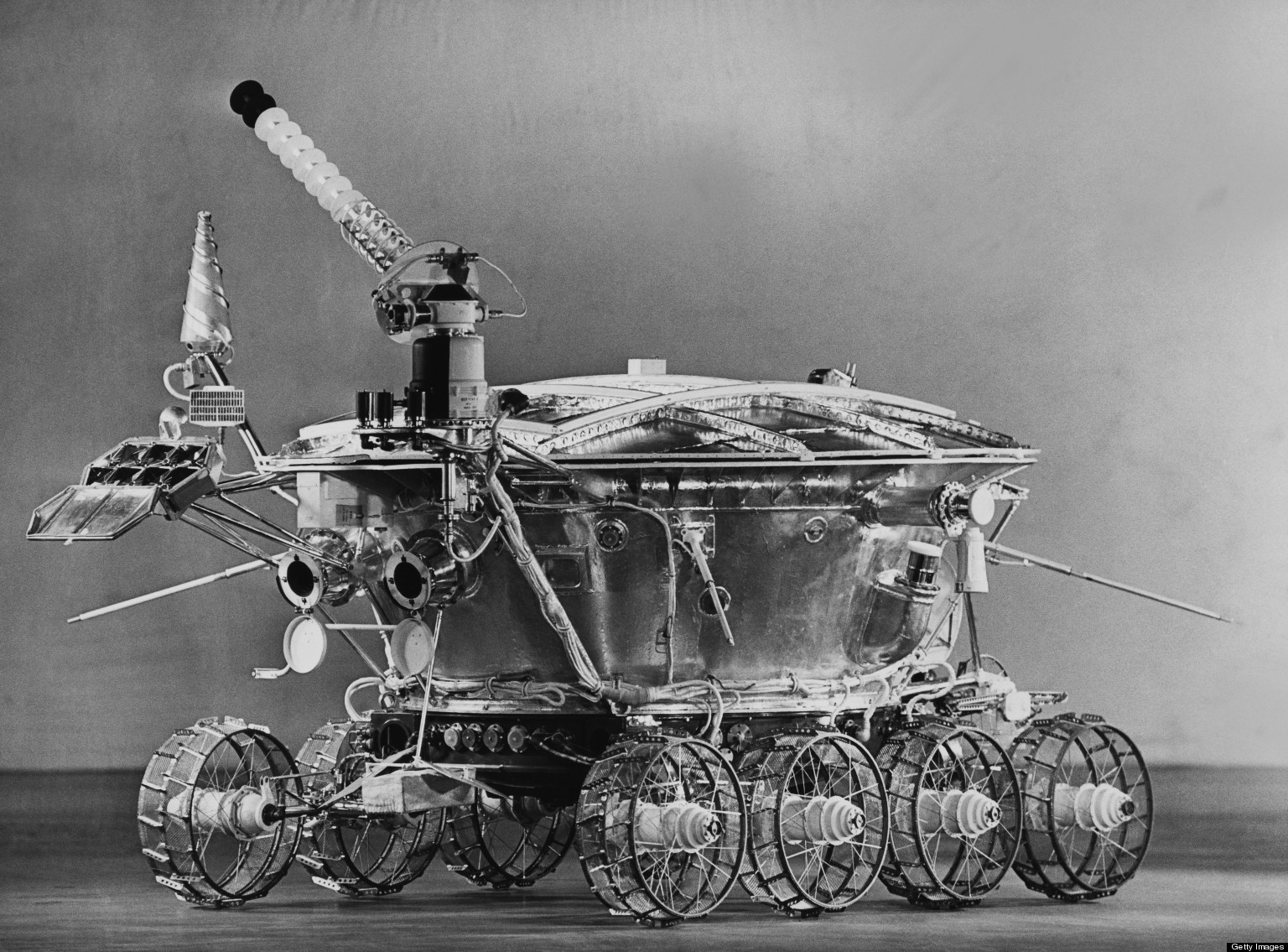
The first case in which the non-pneumatic tyre was manufactured and actually used was the lunar exploration project. The (former) Soviet Union, which fell behind the United States in the space race to send people to the moon, eventually sent an unmanned rover to the moon. The remote-controlled rover Lunokhod 1 (Луноход), which landed on the moon in 1970, was equipped with non-pneumatic tyres consisting of a metal rim supported by wire spokes and a wire mesh tread, like abicycle wheel.

The (former) Soviet Union's unmanned lunar rover Lunokhod 1 is the first vehicle ever to drive on an alien celestial body. It was equipped with a wire mesh tyre supported by the spokes.

The reason Lunokhod 1 had wheels like this was to withstand the lunar environment. The temperature difference between day and night on the lunar surface is extreme, up to 300 degrees Celsius. The heat cannot be dissipated even if friction heat is generated in the tyres while the vehicle is driving as there is no atmosphere. The metal non-pneumatic tyres were chosen as they were durable and had a low risk of damage as there was no room for repair on the moon.

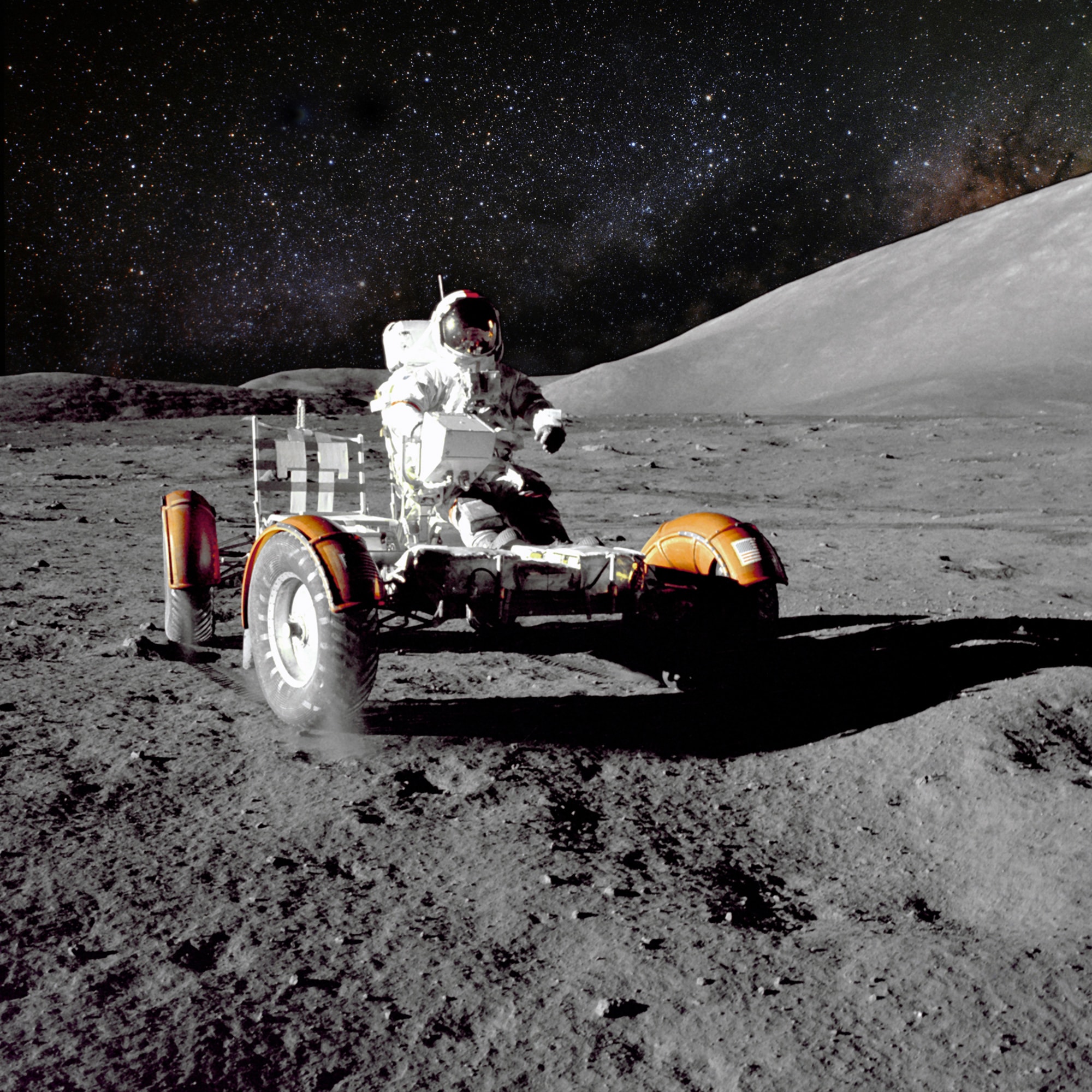
The United States also took a vehicle to the moon. In 1969, after Neil Armstrong of Apollo 11 became the first human to leave footprints on the moon, NASA (National Aeronautics and Space Administration) completed the Lunar Roving Vehicle (LRV). The two-seater LRV, which the astronauts of Apollo 15, 16, and 17 rode on the lunar surface in 1971 and 1972, was a four-wheel drive electric vehicle equipped with non-pneumatic tyres with a wire mesh structure instead of regular rubber tyres. The 81 cm diameter and 23 cm wide tyre, made of 0.84 mm thick steel wire plated with zinc, was quite elastic.

Apollo 17's lunar rover LRV carried astronauts on three exploration missions over three days and ran 35.7 km over a total of 22 hours, with a top speed of 18 km/h.

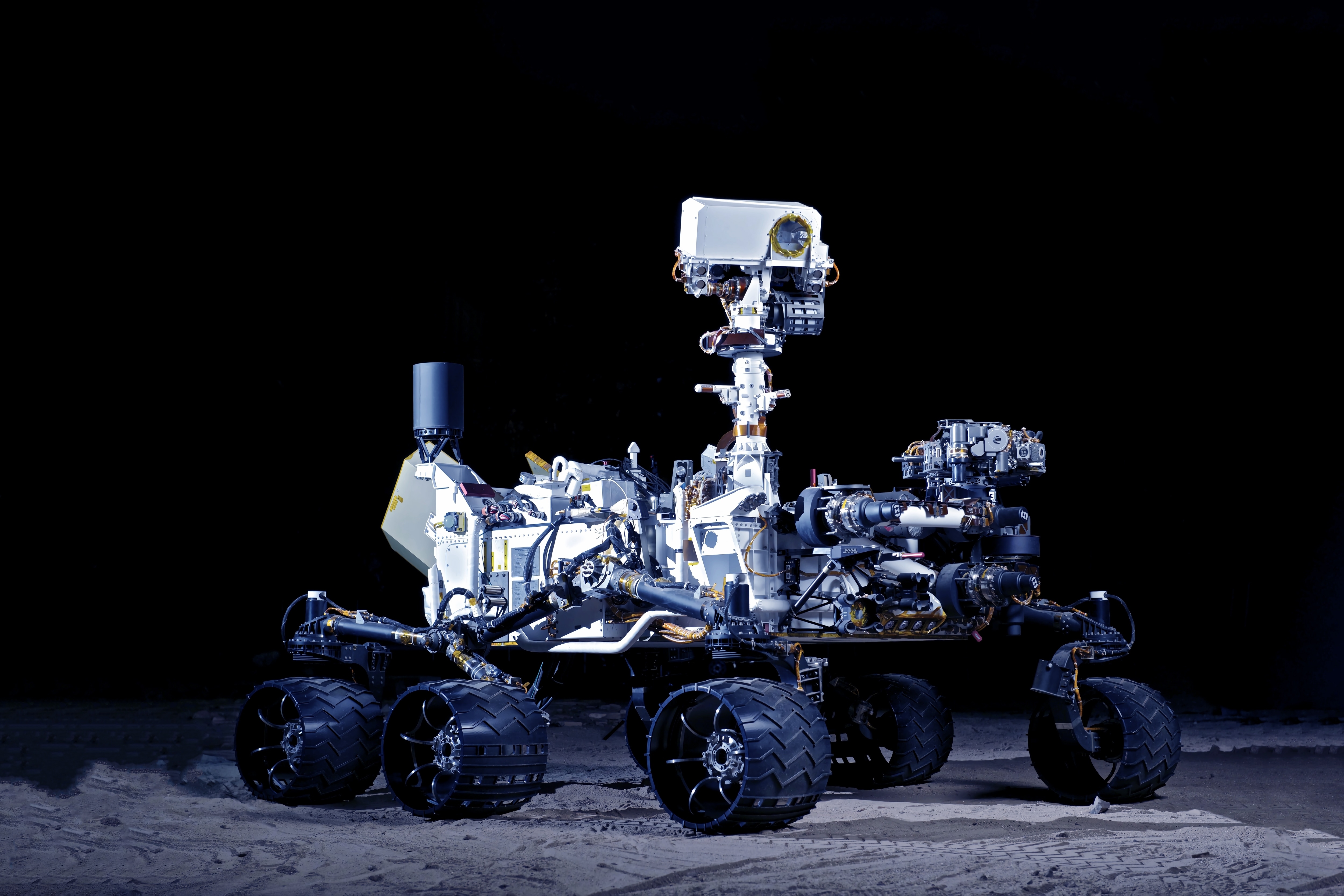
The popularity of non-pneumatic tyres has extended beyond the moon and into outer space. Sojourner, an unmanned rover that landed on the Red Planet in 1997 aboard NASA's Pathfinder Mars rover, was equipped with six small, non-pneumatic tyres with independent suspension and electric motors. The twin exploration rovers, Spirit and Opportunity, which each arrived on Mars in 2004, also roamed the desolate surface of Mars with six non-pneumatic tyres.

Of particular note, Opportunity explored Mars until 2018 and drove drove 45.2 km for 14 years, which was 57 times its design lifespan, setting the ‘longest extraterrestrial driving record.’ The rover Curiosity, which arrived in 2012, continues to run on the surface of Mars. It goes without saying that one of the factors that made such a long mission possible was the durable non-pneumatic tyre. Perseverance, which landed on Mars in 2021, was equipped with sturdier non-pneumatic tyres than Curiosity's.

The unmanned rover Curiosity, which has been exploring Mars for over 10 years, is equipped with six non-pneumatic tyres with a diameter of 50 cm.

NASA is currently researching the superelastic tyre which is made of nickel-titanium with shape memory alloys woven into a tight net. The new non-pneumatic tyre, which is known to provide sufficient elasticity as its name suggests, could be used for the next-generation Mars Rover or the Lunar Terrain Vehicle (LTV) of Artemis, the second manned lunar exploration project.

Meanwhile, NASA is also developing a new lunar vehicle in cooperation with GM, which worked on the Apollo project's LRV production. The Japan Aerospace Exploration Agency (JAXA) also plans to jointly develop a fuel cell-powered manned rover with Toyota and send it to the moon in 2029. All tyres mounted on these space vehicles are non-pneumatic tyres.

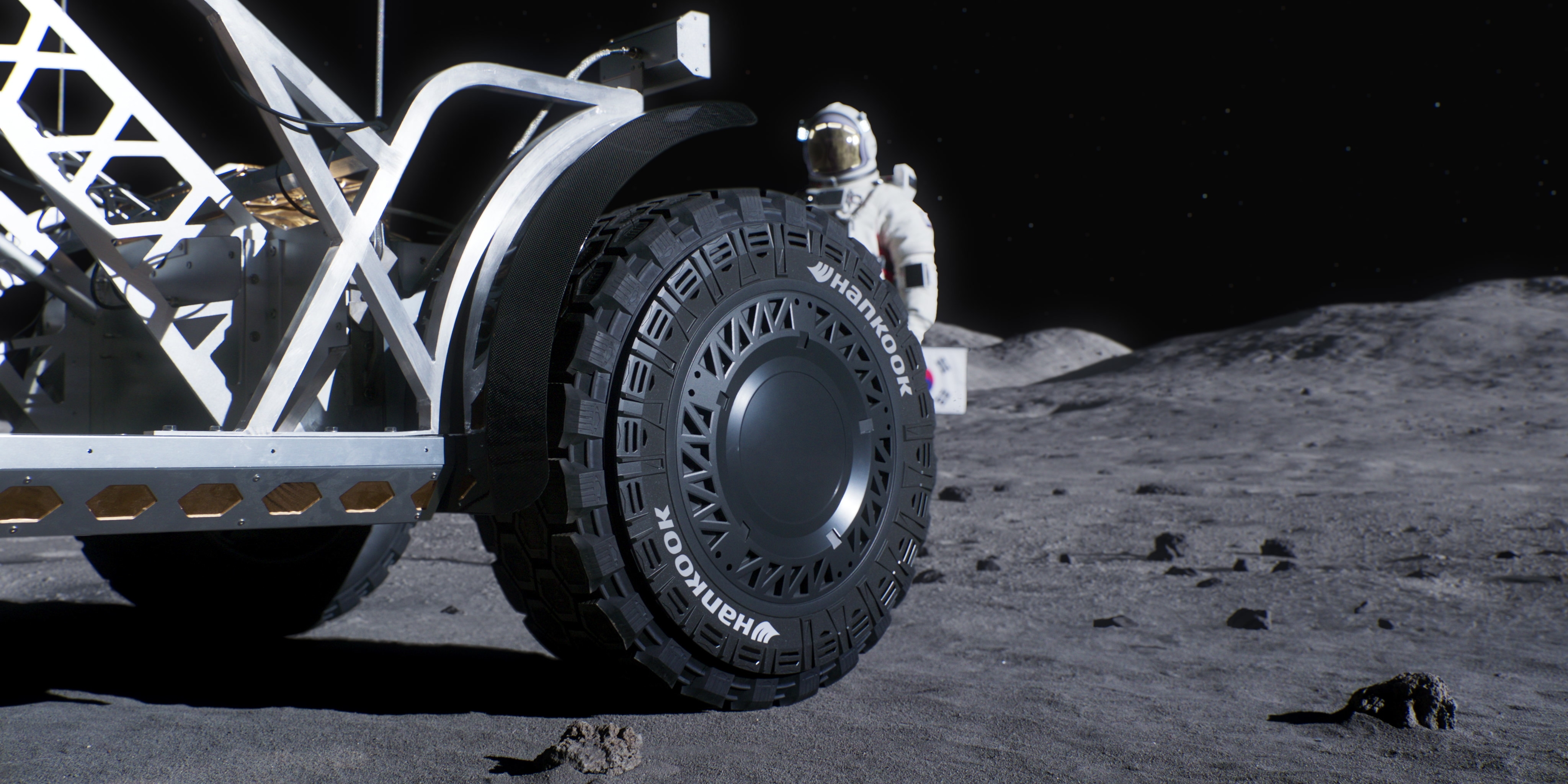
  • A scene from the movie “The Moon.” The Korean lunar exploration team's lunar vehicle is equipped with Hankook Tire's non-pneumatic tyres

Hankook Tire demonstrated its commitment to developing cutting-edge tyres that can perform missions on the lunar surface, where conditions are different from those on Earth, through the movie “The Moon.” In "The Moon," which was released in Korea this summer, a lunar vehicle equipped with non-pneumatic tyres from Hankook Tire races across the rough surface of the moon, passing through a shower of meteors and explosions. Hankook Tire was responsible for both tyre design and production. The tyre was designed to be non-pneumatic like the one for the lunar vehicle.

A universe without air, a tyre without air

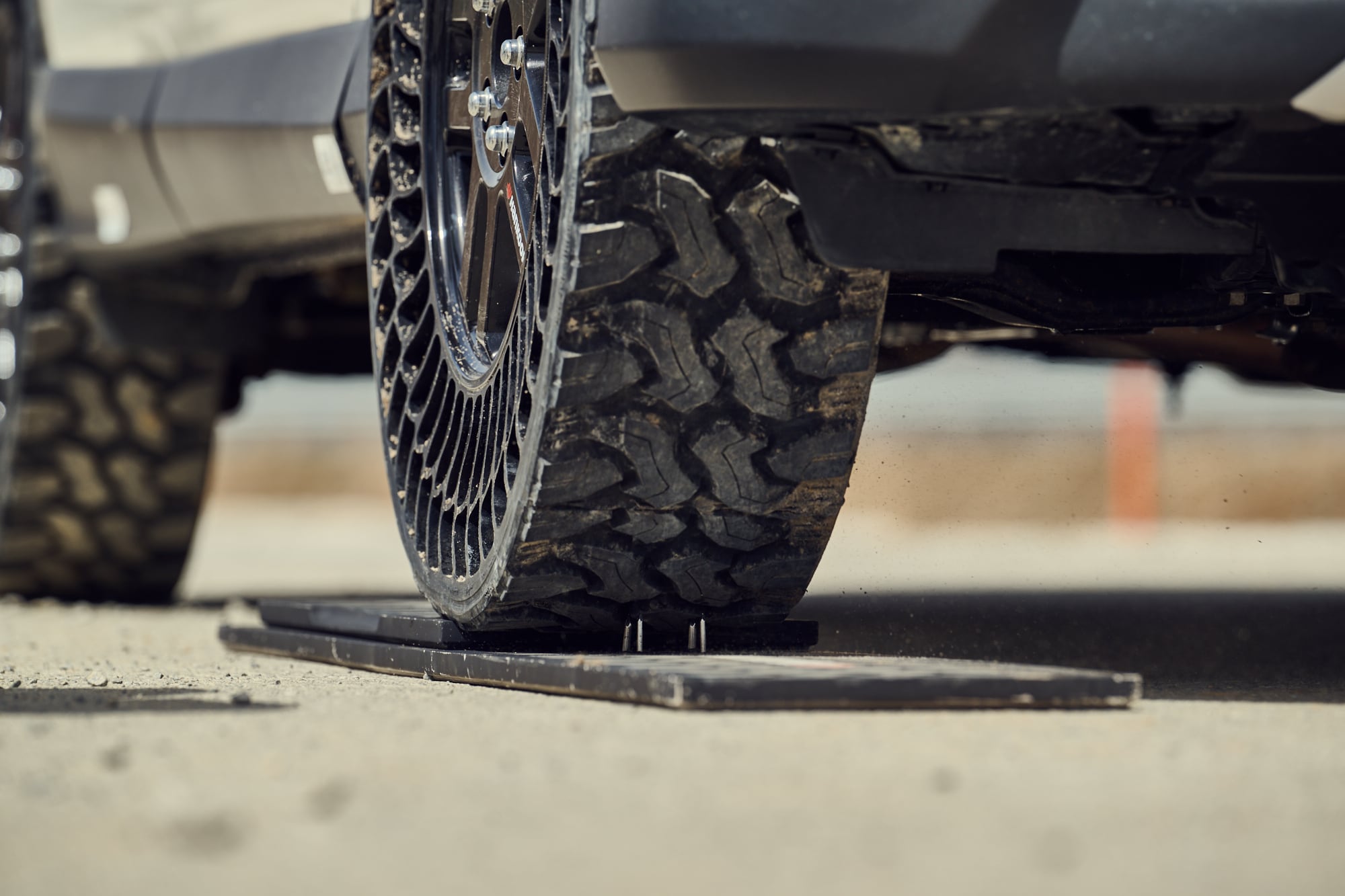
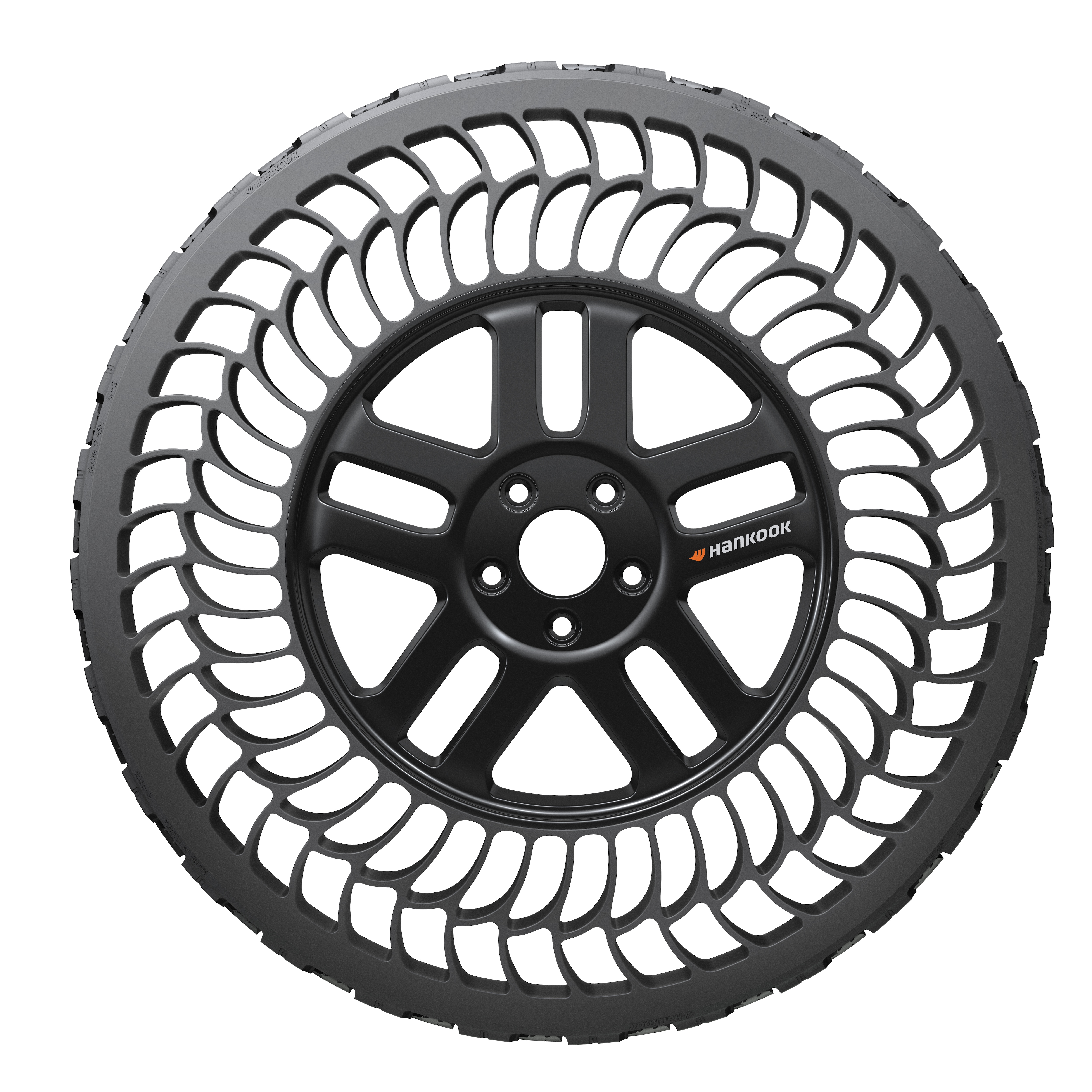
A vehicle requires a specially designed tyre for driving off-road and the non-pneumatic tyre is an excellent choice for this kind of exploration with proven use on military vehicles which must handle rugged mountain ranges, rock-strewn terrain, jungles with mud and swamps, snow fields, and frozen icy roads. This is due to its durability, which is the most outstanding advantage of the non-pneumatic tyre. The iFlex 2, which Hankook Tire introduced at the Defense Expo Korea, DX KOREA 2022, is a futuristic concept tyre that can be used for remote exploration or military purposes .

The iFlex military concept was developed in a form suitable for off-road driving and was installed on HR-Sherpa, a multi-purpose unmanned vehicle to support military operations presented by Hyundai Rotem. It is a further improvement of the first generation non-pneumatic tyre iFlex, and the product exhibited at DX KOREA 2022 was developed in a 17” size. This tyre ensures safety even in unexpected situations like a puncture during the operation, and requires no air pressure management, allowing the best mobility during exhibitions and training.

Hankook Tire's non-pneumatic tyre iFlex 2 was created with highly accurate static characteristics (stiffness and contact shape) spoke design and a pattern design based on dynamic simulations.

iFlex 2 uses a double arch structure which is easy to support and evenly distributes the load, and the outer arch primarily absorbs irregular shocks transmitted from a rough road surface. The inner arch alleviates vibration transmitted to the vehicle's driving unit, and a stable tyre shape is achieved through a hinge structure that connects the inner and outer arches. An optimised pattern was applied to the tread, taking into account the mobility characteristics that allow turning in place. In particular, the side profile of the tread is designed to be trapezoㅅidal so that the rotational force of the unmanned vehicle's motor can be quickly transmitted to the ground, and the driving force is quickly transmitted through the tyres during the autonomous turning.

Optimised for future autonomous mobility

Non-pneumatic tyres are expected to be in the spotlight for self-driving cars, a major consideration for future mobility. To be truly 'autonomous', a vehicle needs to be able to overcome issues that could arise from punctures or damage to a tyre. As such, new tyres which are highly durable and eco-friendly to suit autonomous driving mobility are continuously being developed.

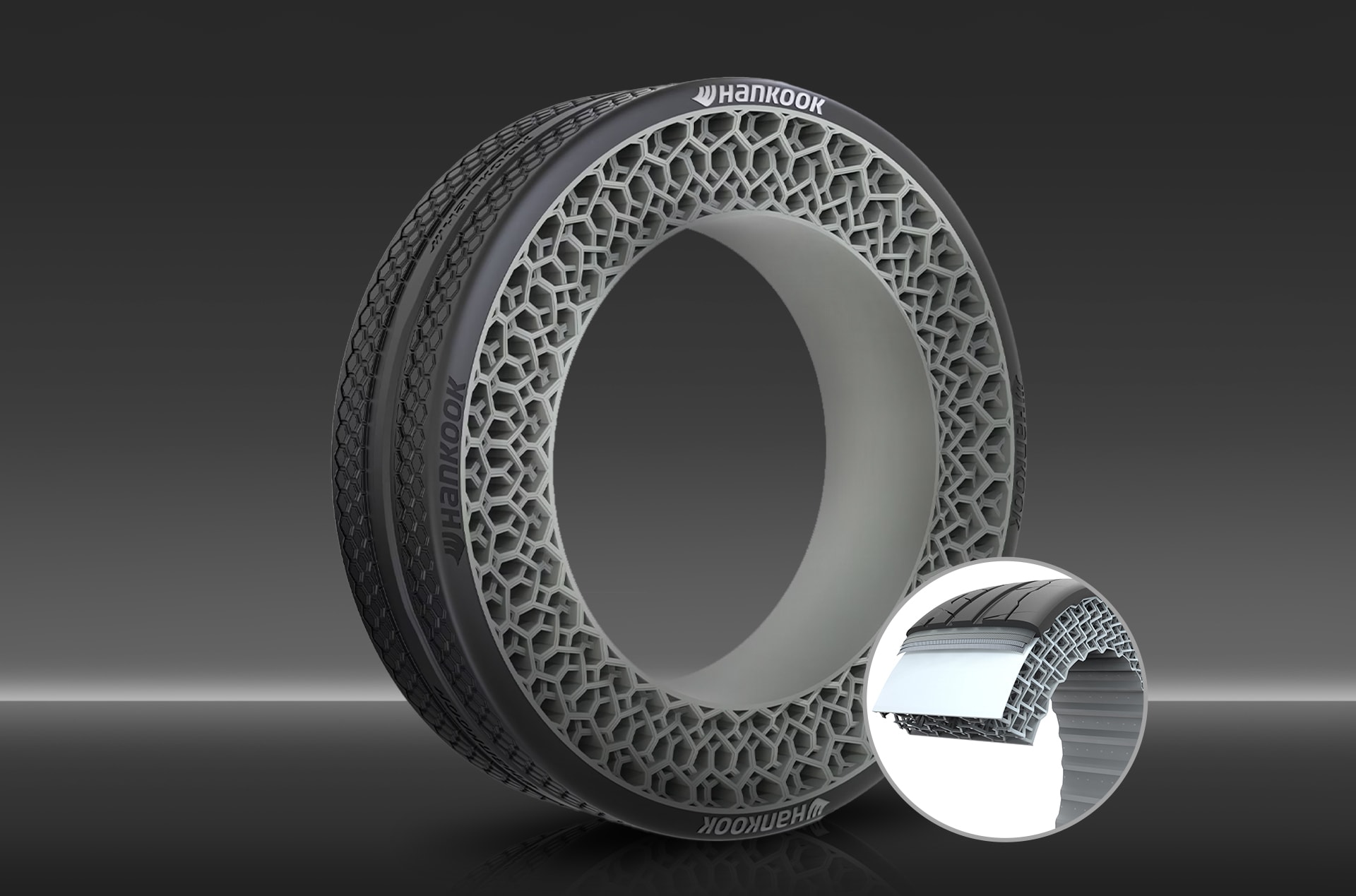
The world's largest Consumer Electronics Show (CES), held every January in Las Vegas, USA, has seen an increase in entries from the automotive sector over the past 10 years. Hankook Tire also introduced iFlex, a non-pneumatic tyre optimised for autonomous driving mobility, at CES 2022. Hankook Tire, which began research on non-pneumatic tyres as a government project in 2010, is innovating non-pneumatic tyres suitable for future mobility with safety, integrity, and sustainability at its core.

Hankook Tire's non-pneumatic tyre iFlex and cross-sectional structure introduced at CES 2022.

iFlex for autonomous driving mobility has a three-dimensional cell designed with a multi-layer interlocking spoke design inspired by biological cell structure to absorb shock and load-bearing performance required during the drive. In addition, hexagonal and square shells of different stiffness are designed to interlock organically, enabling stable load support. The tread also has a hexagonal cell structure, applied with a pattern optimised for autonomous turning while driving. iFlex also won the 2022 Red Dot Concept Main Award (Winner) and the 2022 IDEA Main Award (Finalist).

Non-pneumatic tyres are used in recently introduced future mobility almost without exception. In particular, the fact that it is made of polyurethane UNI-Material, which can be recycled from petroleum-based chemical materials such as existing synthetic rubber and carbon black, is also a future-oriented feature of the non-pneumatic tyre such as iFlex. The uni-material refers to increasing productivity and facilitating the recycling of materials by reducing the production process of products by unifying or simplifying materials of the existing products while maintaining the original performance and function of the product.

Non-pneumatic tyres displayed at 2021 Made in Hankook

Just as air is the essential substance for humans to breathe and live, air is also essential for tyres. Invented in 1888 by a veterinarian out of love for his son to protect him from injury, pneumatic tyres have been considered the basis of tyre technology for over 130 years. However, the days are numbered for air playing the arduous role of supporting weight. Non-pneumatic tyres will be developed infinitely in everyday life in future mobility, ranging from existing vehicles equipped with fixed-axle wheels to wheelbots that move freely at 360° regardless of space and location.